Advanced aesthetics & skin treatments in Brentwood, Essex


Acne can improve or disappear, but for some people the scars left behind can remain long after the active breakouts have settled.
Indented scars, uneven texture and changes in the surface of the skin can be difficult to improve with skincare alone because true acne scarring involves changes deeper within the skin.
At Derma Aesthetics Clinic in Brentwood, Essex, Dermapen microneedling may be considered for certain types of acne scarring once active inflammatory acne is under control.
This guide explains how microneedling works, the types of acne scars it may help and what you can realistically expect from treatment.
What Causes Acne Scars?
When an acne lesion becomes inflamed, the inflammation can damage collagen and other structures within the skin.
As the skin heals, it attempts to repair that damage by producing new collagen. If too little collagen is produced, the healed area can become indented. If excessive scar tissue is produced, the scar may instead become raised.
The likelihood of scarring can be influenced by several factors, including:
- The severity and depth of the acne
- How long inflammatory acne remains untreated
- Individual skin healing and genetics
- Picking or squeezing acne lesions
- The amount of inflammation within the skin
Deep nodules and cystic acne generally carry a greater risk of permanent scarring than mild surface congestion.
Acne Marks Are Not the Same as Acne Scars
Before considering scar treatment, it is important to distinguish between a true scar and a flat mark left behind after acne.
Post-Acne Marks
Red, pink, brown or darker areas can remain after an acne lesion has healed. These are changes in colour rather than physical indentations in the skin.
Brown or darker patches are often described as post-inflammatory hyperpigmentation.
These marks may gradually fade and can sometimes be addressed using professional skincare or treatments aimed at pigmentation and skin renewal.
True Acne Scarring
A true scar changes the structure or texture of the skin. It may appear indented, uneven or occasionally raised.
Microneedling is primarily relevant to suitable indented acne scars rather than simply treating areas of discolouration.
What Types of Acne Scars Are There?
Acne scars can have very different appearances, and one person may have several different scar types at the same time.
Rolling Scars
Rolling scars create shallow depressions and an uneven or wave-like appearance across the skin.
Because these scars often involve broader areas of altered collagen, they may be suitable for collagen-stimulating treatments such as microneedling following assessment.
Boxcar Scars
Boxcar scars are wider indentations with more clearly defined edges. They may be relatively shallow or extend more deeply into the skin.
Some shallow or moderate boxcar scars may respond to microneedling, although deeper scars can require additional or alternative treatment approaches.
Ice-Pick Scars
Ice-pick scars are narrow but deep, creating small holes or pits in the skin.
Because they extend more deeply than many other acne scars, microneedling alone may provide limited improvement and another treatment approach may be more appropriate.
Raised Scars
Hypertrophic or keloid scars develop when excessive scar tissue forms above the normal surface of the skin.
These are very different from indented acne scars and are not something we would simply treat with routine microneedling. Medical assessment may be more appropriate.
How Does Dermapen Microneedling Work?
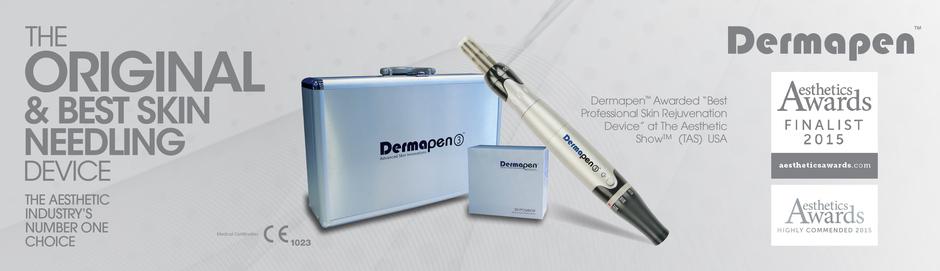
Dermapen is a professional microneedling device containing multiple very fine needles that move rapidly in and out of the skin.
During treatment, these needles create thousands of tiny controlled microchannels.
These controlled micro-injuries trigger the skin’s natural wound-healing response.
As part of that process, the skin produces and remodels collagen and elastin. Over time, this can help improve the appearance of suitable acne scars and create a smoother-looking skin surface.
The aim is not to remove the scar tissue overnight. Microneedling encourages gradual remodelling of the skin over a period of weeks and months.
Why Is Dermapen Used Rather Than a Traditional Dermaroller?
A professional Dermapen device allows the needle depth to be adjusted according to the treatment area and the condition of the skin.
This means different areas of the face can be treated appropriately rather than using exactly the same depth everywhere.
The vertical needle movement also allows controlled treatment of smaller or more difficult areas while minimising unnecessary trauma to surrounding skin.
What Can Microneedling Improve?
When used for suitable acne scarring, Dermapen may help improve:
- The depth and appearance of selected indented scars
- Uneven skin texture
- Overall smoothness of the skin
- The appearance of enlarged pores
- Fine lines alongside acne scarring
- General skin quality
The extent of improvement depends on the type, depth and age of the scars as well as the individual’s natural healing response.
Before & After Microneedling for Acne Scarring
Acne scar improvement occurs gradually rather than immediately because collagen remodelling takes time.
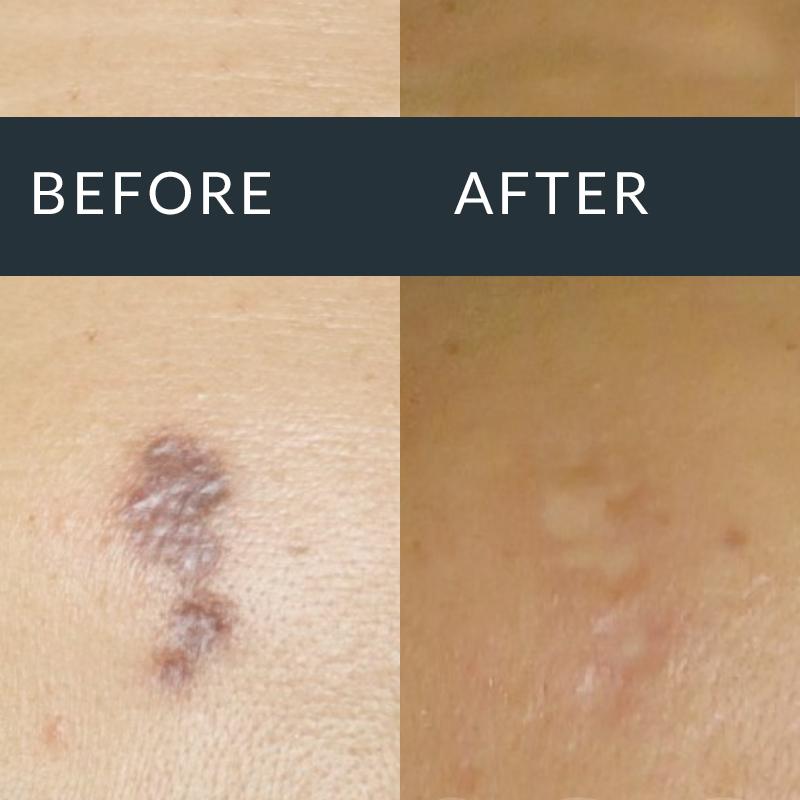
Before-and-after photographs can be useful for demonstrating the type of improvement that may be possible, but individual results vary and no treatment can guarantee completely scar-free skin.
Why Should Active Acne Be Controlled First?
Microneedling is primarily a treatment for the scarring left behind by acne, rather than a treatment for uncontrolled inflammatory acne.
Performing microneedling across areas containing multiple inflamed pustules, nodules or cysts is generally inappropriate because the priority should first be controlling the active acne.
There is another important reason to do this: if new inflammatory acne lesions continue to develop, new scars can continue forming while older scars are being treated.
A sensible treatment plan therefore usually follows this sequence:
- Assess and manage active acne.
- Allow significant inflammation to settle.
- Assess the remaining marks and scars.
- Begin scar-specific treatment where appropriate.
If you are still experiencing active acne, see our Acne Treatment for Teenagers & Adults guide.
What Happens During a Dermapen Treatment?
Your skin will first be assessed and prepared for treatment.
The Dermapen device is then passed systematically across the treatment area. The needle depth can be adjusted according to the area being treated and the skin concern.
When treating acne scars, some areas may require more focused treatment than surrounding skin.
The procedure creates controlled microchannels while leaving much of the surrounding tissue intact, allowing the healing process to begin quickly.
Does Microneedling Hurt?
Most people describe the sensation as uncomfortable rather than severely painful.
The sensation can vary according to the depth of treatment, the part of the face being treated and individual sensitivity.
Bony areas such as the forehead may feel different from fleshier areas such as the cheeks.
What Will My Skin Look Like Afterwards?
Immediately after microneedling, the skin commonly looks red and may feel warm, tight or sensitive, similar to mild-to-moderate sunburn.
You may also experience:
- Redness
- Mild swelling
- Dryness or tightness
- Temporary sensitivity
- Light flaking as the skin settles
The degree of redness varies depending on treatment intensity and individual skin response.
How Much Downtime Is There?
Microneedling generally involves relatively short visible downtime, although this varies between individuals.
The skin is usually at its reddest immediately after treatment and typically settles progressively over the following few days.
Deeper acne-scar treatments can produce more noticeable redness and sensitivity than lighter microneedling undertaken simply for general skin rejuvenation.
How Many Treatments Will I Need?
Acne scarring normally requires a course of treatments rather than a single microneedling session.
The number required will depend on:
- The type of scars present
- The depth of the scars
- The size of the treatment area
- Your skin’s healing response
- The degree of improvement you are hoping to achieve
Treatments are normally spaced apart to give the skin sufficient time to heal and remodel before the next session.
We can discuss an appropriate treatment programme following assessment rather than prescribing the same number of sessions for every client.
When Will I See Results?
Microneedling results develop gradually.
The skin’s collagen-remodelling process continues after the visible redness has disappeared, so improvements can continue developing for weeks following treatment.
After a course of treatments, the aim is for scars to appear less noticeable and for the overall skin surface to look smoother and more even.
It is important to have realistic expectations. Microneedling can improve suitable acne scars, but it cannot completely erase every scar.
Is Microneedling Suitable for Older Acne Scars?
Acne scars do not necessarily have to be recent to benefit from treatment.
Older scars can still be assessed for microneedling, although long-established or deeper scars may require a longer treatment programme or may respond less dramatically.
The type and depth of the scar are generally more important than simply how old it is.
Can Microneedling Help Acne Pigmentation?
It is important to separate pigmentation from scarring.
Dark marks left after spots are commonly caused by post-inflammatory hyperpigmentation rather than scar tissue.
Although microneedling can sometimes form part of a wider skin-rejuvenation programme, pigmentation may be better addressed using treatments specifically selected for uneven skin tone.
At Derma Aesthetics Clinic, these may include professional skincare and treatments such as:
Whether these are appropriate depends on the skin type, pigmentation and condition of the skin.
Microneedling for Different Skin Tones
Microneedling can be considered across a range of skin tones because it does not rely on heat or light energy in the way some laser-based treatments do.
However, every client’s skin should still be assessed individually.
Anyone prone to post-inflammatory hyperpigmentation requires particularly careful treatment planning and appropriate aftercare because inflammation itself can sometimes trigger pigment changes.
Aftercare Following Microneedling
After microneedling, the skin barrier is temporarily more sensitive, so good aftercare is important.
We will provide aftercare guidance appropriate to your treatment, but this commonly involves:
- Keeping the skin clean and avoiding unnecessary touching
- Avoiding picking or rubbing the treated area
- Using gentle skincare while the skin settles
- Avoiding strong acids, retinoids or exfoliating products immediately afterwards
- Avoiding excessive heat, saunas and strenuous exercise for the advised period
- Using appropriate daily sun protection
Following the aftercare instructions helps reduce unnecessary irritation and supports the healing process.
Can Microneedling Be Combined With Other Skin Treatments?
Sometimes a combination approach makes sense because somebody may have more than one acne-related concern.
For example, a client may have:
- Indented acne scars
- Residual pigmentation
- Uneven texture
- Oily or congested skin
It does not follow that all of these concerns should be treated in the same appointment.
A treatment programme may instead address them in stages, allowing the skin to recover appropriately between procedures.
When Might Microneedling Not Be the Best Option?
Microneedling is not necessarily suitable for every person or every type of acne scar.
Alternative assessment may be appropriate where there is:
- Significant active inflammatory acne
- Active skin infection
- Very deep ice-pick scarring
- Raised or keloid scarring
- Certain medical conditions affecting healing
- A history or medication that makes treatment unsuitable
For severe or complex acne scarring, a dermatologist or specialist scar clinic may be more appropriate.
Microneedling vs Chemical Peels for Acne Scarring
Microneedling and chemical peels work differently.
Microneedling primarily creates controlled micro-injury to stimulate collagen remodelling and is therefore particularly relevant to suitable indented scars and uneven texture.
Chemical peels primarily act on the surface and upper layers of the skin and can be particularly useful for congestion, uneven tone, post-acne pigmentation and surface texture.
Neither treatment is automatically better. The correct option depends on whether the main concern is active acne, pigmentation, surface irregularity or structural scarring.
What Results Should You Realistically Expect?
The goal of acne-scar treatment is improvement rather than perfection.
Established scars are changes within the structure of the skin, so completely eliminating them is rarely realistic.
A successful course of microneedling may make scars:
- Shallower
- Less noticeable in different lighting
- Blend more smoothly with surrounding skin
- Contribute less to overall uneven texture
How much improvement is possible can only be judged after examining the type and severity of scarring.
Frequently Asked Questions
Is Dermapen good for acne scars?
Dermapen microneedling can be useful for selected indented acne scars because it stimulates collagen remodelling within the skin. Suitability depends on the scar type and depth.
Can microneedling completely remove acne scars?
No treatment can guarantee complete removal of acne scars. The aim is to soften their appearance, improve texture and make suitable scars less noticeable.
How many microneedling sessions do acne scars need?
Acne scarring normally requires a course of treatment rather than one session. The number required depends on the type and severity of the scars and the individual’s response to treatment.
Does microneedling make acne worse?
Microneedling should not simply be performed across significant active inflammatory acne. Active breakouts should usually be controlled first before beginning scar-focused treatment.
Can teenagers have microneedling for acne scars?
The first priority for a teenager with continuing acne would generally be managing the active condition and preventing further scarring. Scar treatment can then be considered at an appropriate stage following assessment.
Can Dermapen help deep acne scars?
It depends on the type of scar. Some deeper scars may show improvement, while very deep scars such as ice-pick scars may require a different treatment approach.
Is the improvement permanent?
The collagen remodelling achieved within treated scar tissue is not simply a temporary cosmetic effect. However, the skin continues to age normally and new scars can develop if significant active acne returns.
Is Dermapen Right for Your Acne Scars?
The most important part of treating acne scarring is identifying what type of scars are actually present.
At Derma Aesthetics Clinic in Brentwood, we can assess your skin and discuss whether Dermapen microneedling is appropriate, or whether another approach may be better suited to your concerns.
You can also read about our Acne & Acne Scarring treatments or visit our full Dermapen treatment page.
Book a Microneedling Consultation in Brentwood
If acne scarring or uneven skin texture is bothering you, contact Derma Aesthetics Clinic in Brentwood, Essex to discuss whether Dermapen microneedling may be suitable for your skin.
Call 01277 213 980 or view our treatment prices.
Our Awards